Updated May 2026
Mattress firmness by sleep position & body weight
If you wake with sore hips on your side, you may need a softer comfort layer—not a firmer “orthopedic” label.
Mattress firmness guide by sleep position →Independent tatami mattress editorial
We help you size a tatami mattress for your room, pick a thickness that does not swallow you on the floor, and compare builds in plain language—like whether foam or coils will bother a partner who tosses and turns.
Tested & edited by: Tatami Mattress editorial — Independent mattress research & floor-sleeping guides. We test shopping questions the way readers do: room measurements, trial checklists, layer stacks, and tatami footprints—not brand ad copy. Methodology and limits are on our About page.
Mattress shopping is visual—tatami layout, foam contour, and side-sleeper alignment. Each image links to the full guide.
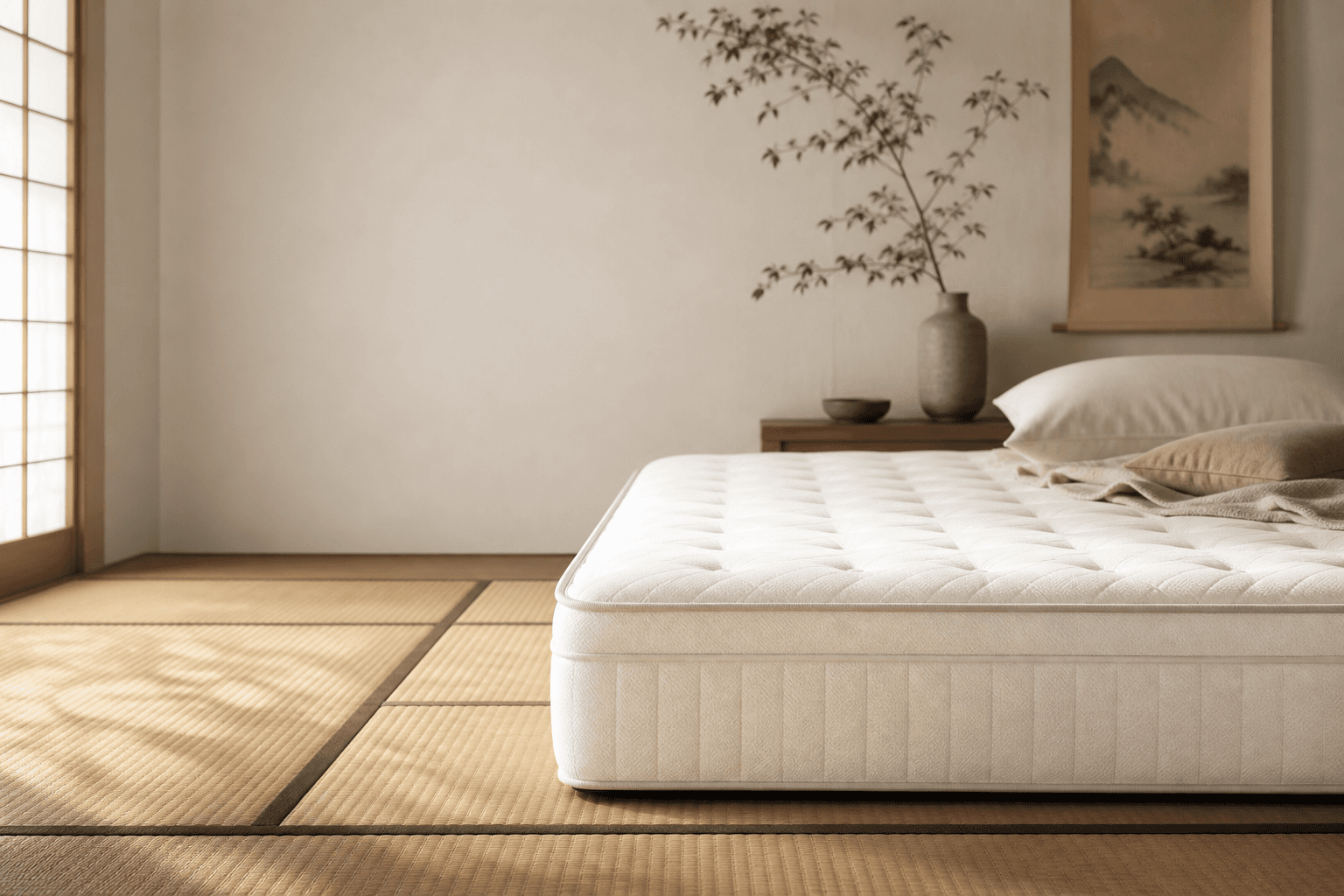
Tatami-style sleeping: mat size, core thickness, and walkways in the room.
Plan tatami mattress size & thickness →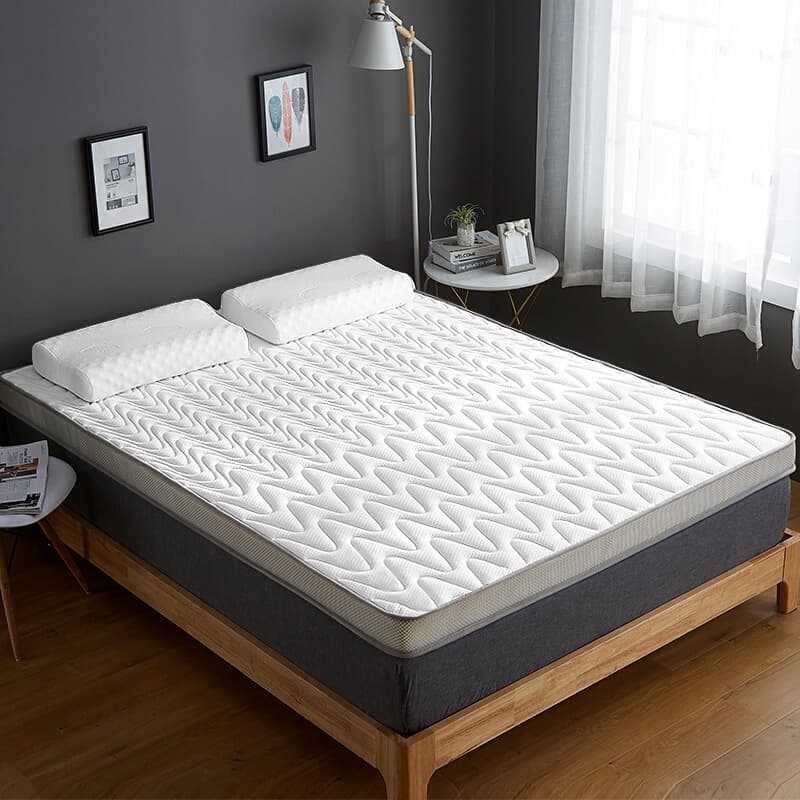
Foam contour vs coil bounce—what you feel at hips and shoulders.
Hybrid vs memory foam mattress (2026) →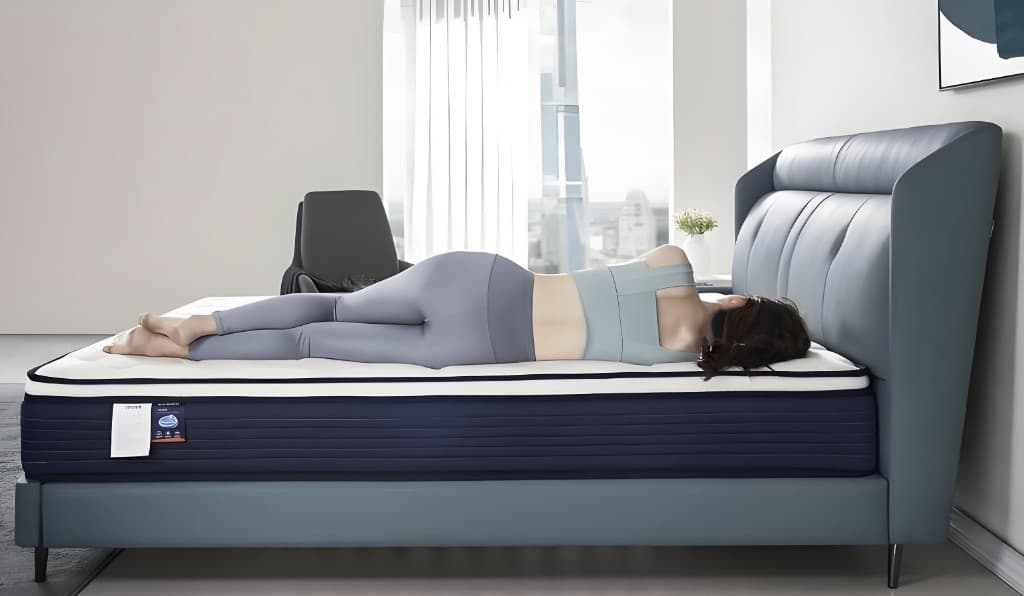
Side sleepers: pressure at the shoulder and hip, not just firmness labels.
Side sleeper mattress for shoulder pain relief →High-intent topics live on their own pages—hybrid vs foam, cooling, side sleepers, and tatami sizing—not buried in generic homepage copy.
Numb shoulders or aching hips? Start here before you add a soft topper to a sagging core.
Best Mattress for Side Sleepers: Topper vs New Bed (2026) →For hot sleepers comparing foam, hybrid, and covers—with a layer-by-layer checklist.
Best cooling mattress layers — what to check →Side-by-side on feel, heat, motion, edges, and price so you can shortlist two builds, not ten brands.
Memory Foam vs. Hybrid Mattress: Which Is Better? (2026) →See if a Queen or tatami footprint fits your room and estimate firmness from height, weight, and position.
Tatami mattress thickness & room size calculator →Hybrid, memory foam, latex, and coil deep dives live under /guides so this page stays focused on tatami mattress sizing and floor sleeping.
Firmness for your sleep position, sleeping hot, and couples—written as checklists you can use on a showroom mattress, not adjectives from a brochure.
Updated May 2026
If you wake with sore hips on your side, you may need a softer comfort layer—not a firmer “orthopedic” label.
Mattress firmness guide by sleep position →Updated May 2026
A cool-to-touch cover helps for minutes; coil gap and thinner foam usually matter more through the night.
Best cooling mattress layers — what to check →Updated May 2026
If your partner tosses and turns, memory foam usually transfers less movement than an open-coil innerspring.
Motion isolation & edge support for couples →Start with tatami size and thickness, then branch to hybrid, foam, or scenario guides. Follow the steps in order, or jump to the problem you woke up with.
If you sleep on mats or a low frame, start with the calculator: room footprint, tatami mat size, and a thickness that will not leave you swallowed on the floor.
Open a guide for foam, hybrid, latex, or coils when you know your room fits. You are choosing how the bed feels and breathes—not a marketing tier name.
When you are down to foam vs hybrid, use the comparison table for heat, motion, edges, and price in one view—then test those rows on a real mattress.
Hot at night, sore hips on your side, or a partner who moves? Read the scenario review that sounds like your morning, not a generic “best mattress” list.
Side sleepers, cooling setups, and hybrid vs foam have their own URLs with descriptive links from the homepage—so Google and readers know what each page is for.
On a showroom or home trial: sit the edge, lie on your side for hip pressure, wait ~20 minutes for heat, and have your partner roll once at the foot of the bed.
Tatami mattress thickness calculator · Memory Foam vs. Hybrid Mattress: Which Is Better? (2026) · Best mattress for side sleepers with hip pain · Mattress construction guides · Mattress scenario reviews · Best mattresses articles
Real shopping situations and which parts of the site to use first.
You have an empty bedroom, a budget, and no idea whether foam or coils suit you.
Where to start
Guides → comparison table → firmness review
Outcome: Pick a construction family, shortlist two firmness targets, then measure the room before you order.
You wake warm and wonder if a hybrid or thinner comfort layer would help without starting over.
Where to start
Cooling review → hybrid guide → comparison table
Outcome: Decide whether airflow from coils is worth the trade-off in motion feel before you replace the whole mattress.
One partner likes a firm surface; the other needs pressure relief on the side.
Where to start
Motion isolation review → firmness review → calculator (twice)
Outcome: Clarify motion and edge needs, compare firmness scores, and consider split setups or dual-feel models.
Shoulders and hips ache; you are unsure whether a topper is enough.
Where to start
Side sleeper topper guide → memory foam guide → firmness review
Outcome: Learn when a topper fixes pressure vs when the core is too firm or collapsed.
You want a futon-style setup with the right loft and floor footprint.
Where to start
Calculator (tatami size + thickness) → latex or foam guide
Outcome: Size the footprint on tatami mats and avoid stacks that are too thick for floor sleeping.
Everything is bed-in-a-box marketing and you need a defensible shortlist.
Where to start
Comparison table → Best mattresses → calculator
Outcome: Filter by construction and firmness band, then confirm room fit before you commit to a trial.
End-to-end paths showing how guides, reviews, and tools fit together.
Result: Target medium-soft to medium (about 5–6/10) with a zoned or softer shoulder zone; prioritize 10–14″ total height unless on tatami.
Takeaway: You are shopping for contour at hips and shoulders, not the firmest “orthopedic” label on the spec sheet.
Result: Hybrid shortlist for airflow; verify motion transfer on each finalist. Queen fits with workable walkways in an 11×12 ft room.
Takeaway: Cooling and partner disturbance decide the build; size planning prevents a cramped layout.
Result: Twin leaves more floor space; Full is viable if walkways stay above ~24″. Topper only helps if the current core is still even.
Takeaway: Footprint and core condition matter as much as marketing discounts.
Result: Thin-to-medium stack (roughly 3–4″) often suits floor sleeping; latex or firm foam avoids deep sink. Confirm mat size on the floor plan.
Takeaway: Tatami is a system—mat, core, and room layout—not a single SKU decision.